
Potency, Dilution, and Avogadro’s Limit Explained: Homeopathy as a Scientific System.
Homeopathy has long been misunderstood in the context of modern biomedical science, particularly concerning its use of potentized remedies and serial dilutions. This article explains these concepts clearly, presenting homeopathy as a structured, competitive scientific system with its own pharmacological logic.
Understanding Potency in Homeopathy
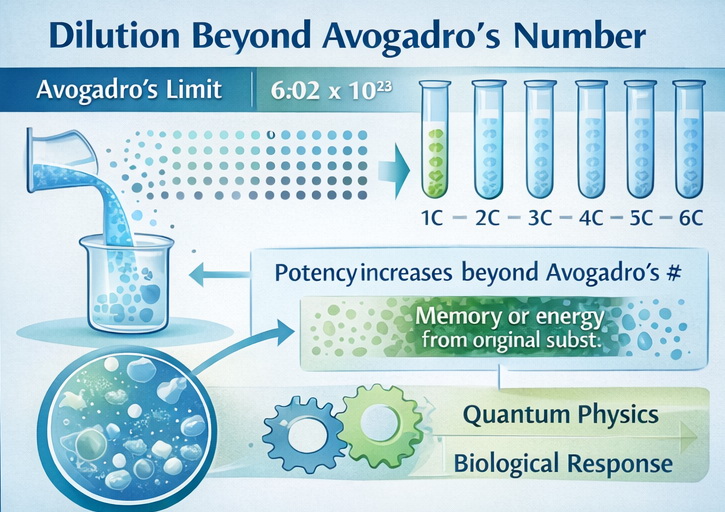
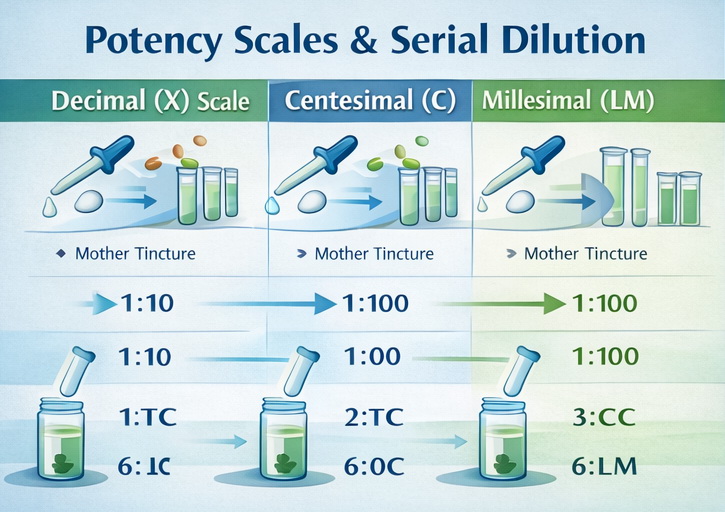
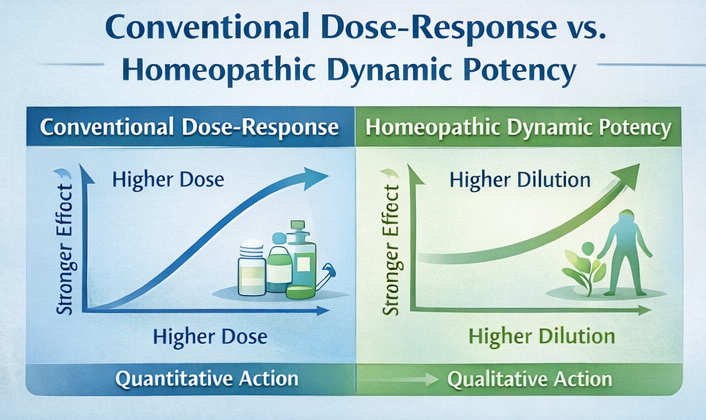
In homeopathy, potency refers to the strength and depth of a remedy’s therapeutic action rather than its quantity. Remedies are prepared through serial dilution and succussion (vigorous shaking), which, according to homeopathic philosophy, enhance the dynamic medicinal properties while minimizing toxicity. Potency scales include:
· Decimal (X) Scale: 1 part substance in 9 parts solvent
· Centesimal (C) Scale: 1 part substance in 99 parts solvent
· Millesimal (LM) Scale: 1 part substance diluted 1:50,000 at each step
Dilution Beyond Avogadro’s Number
Scientific Perspective and Observations
Integrative Scientific Philosophy
Key Takeaways
· Potency reflects therapeutic depth, not material concentration.
· Serial dilution and succussion are systematic methods to enhance dynamic medicinal action.
· Remedies beyond Avogadro’s number are active within homeopathic philosophical and clinical frameworks.
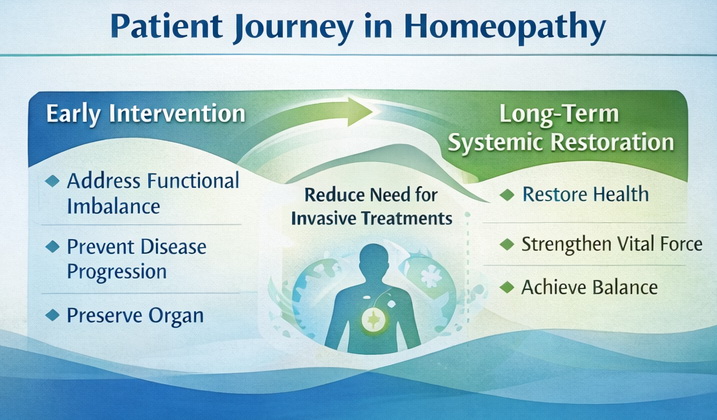
· Homeopathy offers a scientifically structured approach complementary to conventional medicine, particularly in long-term and preventive care.